The housing is made of high-quality stainless steel, which is offered in two widths for regular or wheelchair-accessible pathways. The robust drive motor is extremely quiet, energy-efficient, and require no maintenance, and their sensitive impact detection effectively prevents injuries and property damage. All common ticket systems can be used to operate the integrated control system, which comes with bidirectional operation as standard. In addition, the physical barrier immediately retracts into the housing to offer a free passageway in the event of a power outage.

Features
1. Fast user throughput
2. Silent control for precise positioning
3. Card in/card out; card in/free exit; either or both directions closed for use
4. Automatic opening in case of power failure or emergency alarm trigger
5. Infrared sensors prevent retractable panel impact with persons or objects
6. Provides reliable access control with low maintenance.
7. Highly intuitive LED-illuminated user graphics
8. Integrates easily with access control systems
9. Anti-fraud system with audible warning and detection of attempted tailgating, backward entry, and attempted passage without validation.
10. Provides a larger passage width of 900mm for easier access of disabled personnel even maintenance carts.
Applications
Company premises
Data centers
Airport and port areas
Industrial plants
Government facilities
Stadiums
Parameters
| Housing Material |
#304 stainless sheet |
| Dimension |
1200 x 300 x 980mm |
| Power Supply |
AC110V~240V, 50/60hZ |
| Channel Width |
550mm |
| Drive Motor |
DC 24V brush motor |
| Pass Speed |
40 persons per minute |
| Input signal optional |
Dry contact signal or +12V level signal or DC12V pulse signal |
| Rotating Direction |
Bi-directional |
| Communication interface |
RS485 |
| Arm drop when power failure |
Yes |
| Open Time |
0.2 second |
| Life Cycle |
3 million times |
| Working Temperature |
-30°C~+70°C |
| Working Environments |
Indoor, outdoor (with shelter) |
The Dimensions
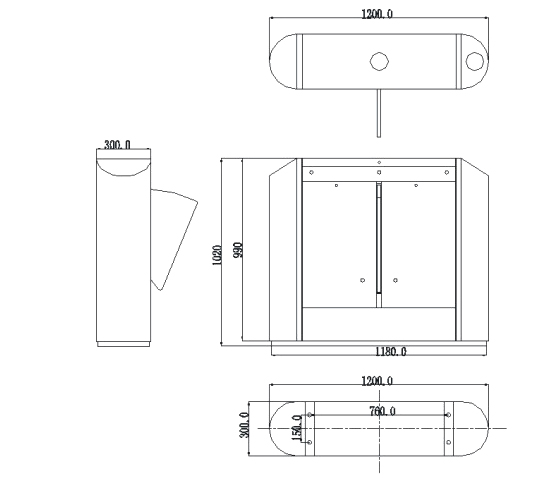
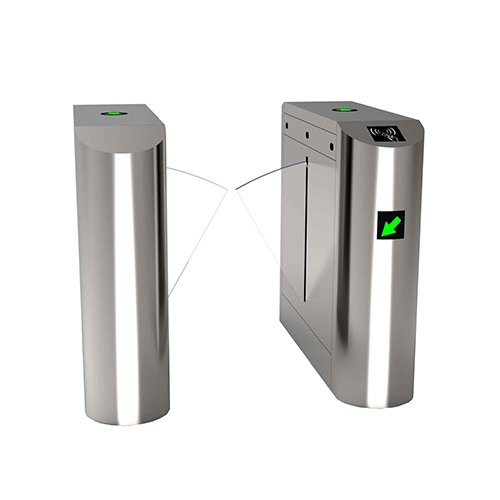
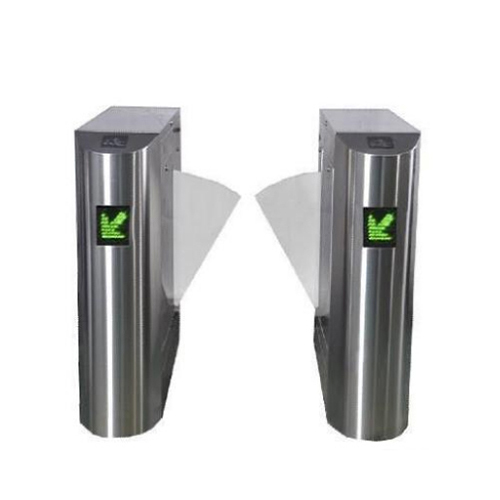
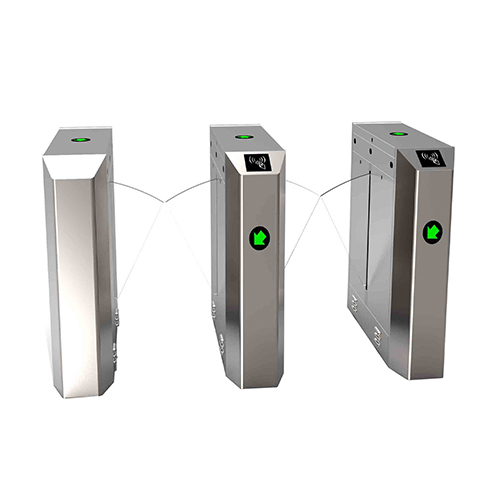
Flap access control turnstile system JDYZ-2 uses two acrylic wings as blockage and retracts into the stainless-steel pedestal on receiving an opening signal from any external devices connected. Each lane is fitted with sensor to ensure proper access clearing and the safety of the Pedestrian before the wings closes back. The rectractable flap barrier provides a seamless and secure way to manage high footfall areas such as reception zones and entry points, while maintaining both speed and safety. It is also commonly seen in airport immigration e-gate solutions, where access is granted through automated identity verification. This makes flap barrier gate an essential part of modern smart security infrastructure, combining automation, access control, and real-time monitoring.
During power failure or fire alarm activation, access control flap turnstile system switches to fail-safe mode, keeping pathways open in line with life-safety requirements.

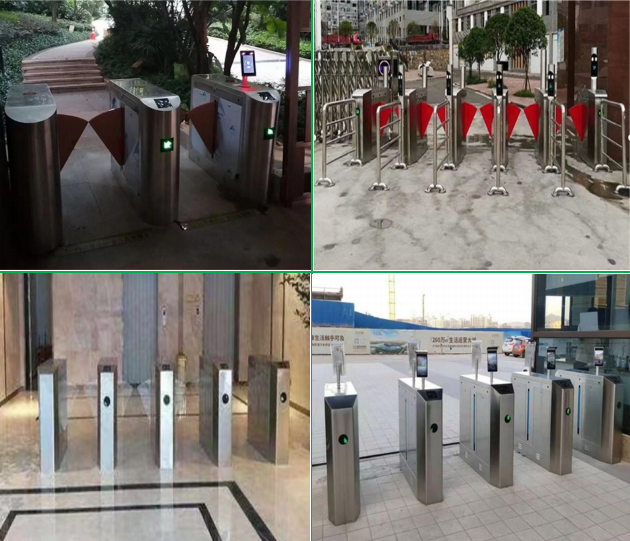
Project Cases
FAQs
What is a flap turnstile access control system?
It is another popular access control turnstile, where retractable flaps open and close to control pedestrian flow. It is particularly effective in environments requiring quick and controlled access, such as office buildings or metro stations. The flap barrier turnstile integrates with modern access control systems, providing both security and seamless entry for authorized individuals.
How does the flap turnstile access control system work?
When closed, the wedge-shaped acrylic or glass wings of the flap turnstile access control system join together to form a blockage; when opened, the wings fully retract into the cabinet. Before the wings close back, the pathways are controlled by optical sensors to guarantee sufficient access clearance and the pedestrian’s safety. The access control flap turnstile is built with common interfaces to connect with different dry contact access control systems. The optical turnstile’s motorized barriers must be retracted into the cabinet to allow a single passage in the desired direction. To enter, users must first display a valid credential. Its sensors detect attempts to pass illegally and trigger an internal alarm whenever an unauthorized user tries to enter without permission or tailgates a legitimate entry. It allows for either unidirectional or bidirectional traffic flow, and swings freely retract in an emergency or when power is lost.
What are the benefits of using a flap turnstile access control system?
It offers high throughput, modern aesthetics, tailgating prevention, easy integration with access control systems, and safe emergency exit operation.
What is the purpose of a flap turnstile access control system?
Its primary purpose is to combine security with smooth pedestrian flow by physically controlling access without creating a harsh barrier.
Where is flap turnstile access control system typically used?
It is commonly used in locations requiring high security and controlled access, such as office buildings, transit stations, airports, and event venues. Access control flap turnstile is ideal for managing large volumes of foot traffic while maintaining security.
What happens during power failure / emergencies?
It is designed with an inbuilt battery backup that enables the flaps to be opened during power failures. This feature ensures that people can safely exit the facility in case of emergencies.
Is flap turnstile access control system suitable for high-traffic areas?
Yes, it is designed for high pedestrian throughput with advanced safety sensors.
What maintenance does flap turnstile access control system require?
It requires periodic maintenance, including cleaning the panels, checking the electronic components, and ensuring that the sensors and access control systems are functioning correctly. Regular inspections help prevent malfunctions and extend the device’s lifespan.
How to install flap turnstile access control system?
It must be installed on a flat level and concrete base of a minimum thickness of 100 to 200 mm and of suitable quality to accept raw bolts or expanding anchor bolts. First, drill foundation holes in the ground for assembling the flap turnstile system. Then, insert the foundation bolts inside the holes of the base plate. Remove the front panels, and fix the main body on the foundation bolts. Check all the sub-assembly parts inside the enclosure. Switch ON the supply and check the functioning of the flap barrier system. Once this is done, fix all the front panels.


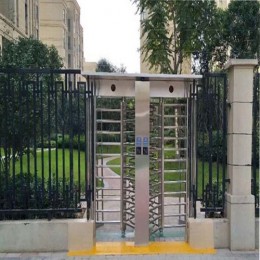
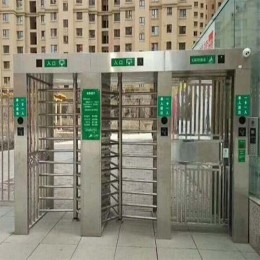

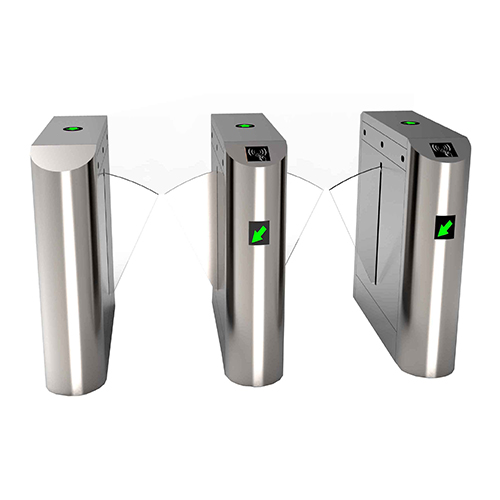

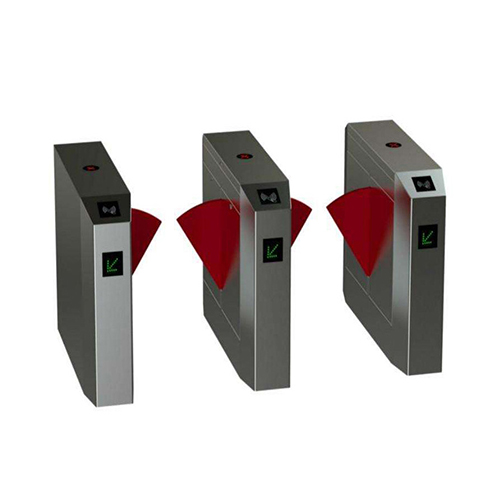


 Flap Barrier Gate Turnstile JDYZ-30
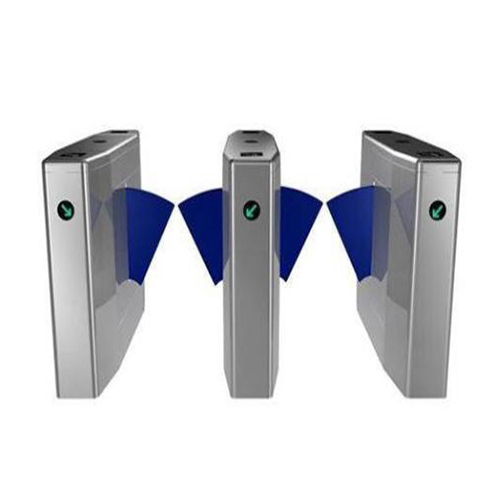
 Flap Gate Optical Turnstile JDYZ-29
 Access Control Flap Turnstile JDYZ-28
 Flap Turnstile Barrier Gates JDYZ-27
Please leave a message if you are interested in this model