The Latest Analysis of Global Pedestrian Turnstile Gate Market
Key Findings for the Global Pedestrian Turnstile Gate Market, 2024–2025
I. Global Market Overview
(i) Market Size and Growth Trajectory
In 2024, the global smart access turnstile gate market generated approximately USD 725 million in revenue, and is projected to reach USD 953 million by 2031, representing a compound annual growth rate (CAGR) of 4.0% over the 2025–2031 period. Within this landscape, subway pedestrian gate turnstile systems—a core segment of the pedestrian access turnstile gate market—recorded a market size of USD 2.22 billion in 2024, with expectations to climb to USD 3.40 billion by 2032, at a CAGR of 5.48% from 2025 to 2032. This positions the subway segment as one of the primary engines driving global market expansion.
The global market’s growth is underpinned by several key drivers:
1) Accelerating urbanisation and population concentration in cities across Asia, Africa, and Latin America, which are spurring substantial upgrades to public transport infrastructure and fuelling demand for gate systems;
2) Continuous technological innovation—integrating contactless payment, biometric recognition, and AI‑powered anti‑tailgating features—which has significantly enhanced both the functionality and security of these systems;
3) Supportive government policies and public funding for smart city initiatives and transit development worldwide;
4) The growing need for standardised, intelligent pedestrian flow management across diverse application scenarios, driving a transition from conventional access control to comprehensive, integrated management solutions.
(ii) Regional Market Distribution (2024)
The global pedestrian access gate market exhibits a distinct tripartite structure, characterised by “Asia‑Pacific dominance, mature markets in Europe and the Americas, and rapid growth in emerging economies.” The table below summarises each region’s market share, scale, and growth characteristics, with core data compiled from in‑depth research by various authoritative institutions.
|
Continent
|
Market Share
|
Market Size
(USD billion)
|
Key Drivers
|
2025–2031 CAGR |
|
Asia�Pacific
|
45.2%
|
3.27
|
Smart city construction in China, urbanisation in Southeast Asia, digital transformation in India, and expansion of high�speed rail and subway networks |
5.8%
|
|
Europe
|
23.7%
|
1.72
|
Intelligent retrofitting of transport hubs, GDPR compliance requirements, and security upgrades for premium commercial buildings |
3.9%
|
|
North America
|
20.1%
|
1.46
|
Airport security enhancements, high�end building and smart campus development, and widespread adoption of biometric technologies |
4.2%
|
|
Latin America
|
6.8% |
0.49
|
Smart city projects in Brazil and Mexico, new rail transit construction, and rising demand for foundational security solutions |
5.1%
|
|
Middle East
& Africa
|
4.2%
|
0.30
|
Digital transformation in the Middle East (UAE, Saudi Arabia), infrastructure upgrades in Africa, and security needs for ports and government facilities |
6.3%
|
Data sources: Global Info Research, “Smart Access Turnstile Gate Market Report, 2024–2031”; WiseGuy Reports, “Subway Gate Market Analysis and Forecast to 2032”; and China Report Hall industry research compilation.

II. In-Depth Analysis of the Asia-Pacific Regional Market (Global Core Growth Pole)
(i) Regional Overview
The Asia-Pacific region is the world’s largest market for pedestrian access turnstile gates, contributing 45.2% of global market share in 2024. Its core advantages lie in its vast population base, rapid urbanisation, substantial investment in smart city development, and the fact that China—as the world’s largest single market—directly drives regional growth. The product landscape within the region is characterised by a “mid-to-high-end dominance, supplemented by low-end offerings.” Mainstream products are intelligent turnstiles integrated with facial recognition and QR code readers, with price ranges spanning USD 800–12,000 per unit, suitable for diverse scenarios including metro stations, commercial complexes, and smart industrial parks. Chinese brands (Jieshun, Fujica, Hikvision, and Dahua) collectively hold over 50% of the regional market share.
(ii) Major Country Sub‑Analysis
1. China (The World’s Largest Single Market)
Global market share: 38.7% globally; 85.6% within Asia‑Pacific (2024). China is both the leading producer and consumer of pedestrian turnstile gate worldwide.
Market size: In 2024, the domestic pedestrian entry control equipment market reached approximately RMB 2.42 billion (about USD 338 million), accounting for 103.4% of the Asia‑Pacific market (including export share), with a year‑on‑year growth of 12.3%.
Product mix by type: Swing turnstile gates 35.2%, flap barrier turnstiles 28.7%, tripod turnstiles 18.5%, speed gate turnstiles 12.6%, and full‑height turnstile gates 5.0%. Among these, swing gates have become the mainstream choice due to their broad applicability and strong environmental adaptability.
Market demand share: Rail transit (metro/high‑speed rail) 38% (predominantly flap barriers and swing gates, with utilisation rates exceeding 80%); commercial complexes 22%; smart industrial parks 18%; construction sites 9% (tripod turnstile gates cover over 90% of this segment); educational institutions 8%; and others 5%.
User preferences: Multi‑modal integration combining facial recognition, QR codes, and IC cards; anti‑tailgating and anti‑passback features; outdoor waterproofing (IP54+); and a strong preference for domestically manufactured equipment. The top four domestic brands—Jieshun, Fujica, Hikvision, and Dahua—together with second‑tier players such as ZKTeco, Turbo, Hongmen, Baishun, and Jayda, command over 60% of the market. In premium settings, biometric technologies (palm vein, iris recognition) are being progressively adopted.
Turnstile price tiers: Low‑end (tripod gate turnstiles) USD 800–1,500/unit; mid‑range (swing/flap turnstile gates) USD 2,000–5,000/unit; high‑end (speed gate turnstiles / multi‑modal biometric turnstiles) USD 6,000–12,000/unit. In high‑end scenarios such as Grade‑A office buildings, speed optical turnstile gates account for up to 87% of installations.
Data sources: China Report Hall, “2025–2030 Global and China Pedestrian Access Gate Industry Market Report”; Sohu.com (mobile) articles “Which Pedestrian Access Gate Is More Popular with the Public?” and “Complete Buying Guide for Pedestrian Access Gates.”
2. India (The Second‑Largest Emerging Market in Asia‑Pacific)
Global market share: 3.8% globally; 8.4% within Asia‑Pacific (2024). India is one of the fastest‑growing markets in the region.
Market size: Approximately USD 270 million in 2024, with a projected CAGR of 7.2% from 2025 to 2031, primarily driven by government office and rail transit construction.
Product mix by type: Tripod automatic turnstiles 45%, swing contactless turnstile gates 30%, flap barrier turnstiles 15%, speed pedestrian turnstile gates 10%. The market is currently dominated by low‑cost, economy‑friendly products, with a gradual shift toward intelligent models (QR code and facial recognition).
Market demand share: Government offices 30%; rail transit 25%; commercial buildings 20%; airports 15%; schools 10%. Metro gate systems are predominantly manual or electromechanical types, with electronic turnstiles being gradually introduced.
User preferences: IC card and QR code‑based systems, low‑cost solutions, basic anti‑tailgating functions. There is a clear preference for Chinese, European, and American brands, with ZKTeco, HID, and Jieshun holding significant market shares.
Price tiers: Low‑end (tripod gate turnstiles) USD 500–1,200/unit; mid‑range (swing turnstile barrier gates) USD 1,500–3,000/unit; high‑end (flap barrier turnstiles / speed turnstile gates) USD 4,000–8,000/unit. Overall prices are approximately 30% lower than those in the Chinese market.
Data sources: Global Info Research, “Smart Access and Turnstile Gate Market Report, 2024–2031”; China Report Hall industry research data.
3. Southeast Asia (High‑Growth Potential Market)
Key countries include Vietnam, Thailand, Indonesia, Malaysia, and Singapore. Singapore represents the high‑end sub‑market, while Vietnam and Indonesia are primarily low‑to‑mid‑range markets. The overall regional dynamic is characterised by “high‑end leadership and mid‑range expansion.”
Global market share: 2.7% globally; 5.9% within Asia‑Pacific (2024).
Market size: Approximately USD 190 million in 2024, with a projected CAGR of 6.8% from 2025 to 2031, making it one of the faster‑growing sub‑markets in Asia‑Pacific.
Product mix by type: speed barrier turnstiles 40%, flap turnstile barriers 30%, automatic tripod gate turnstiles 20%, speed turnstile barrier gates 10%. In Singapore, speed turnstile gates account for 35% of installations, while in Vietnam and Indonesia, tripod turnstiles exceed 30%.
Market demand share: Rail transit 35% (primarily swing barrier gates and flap turnstile barrier gates, suitable for luggage and wheelchair access); commercial complexes 25%; smart industrial parks 20%; airports 15%; hotels 5%. Metro turnstile gate systems are predominantly deployed as integrated solutions to enhance operational efficiency.
User preferences: QR code and facial recognition‑based systems; high‑corrosion‑resistant outdoor designs; multilingual interfaces. Chinese brands Jieshun, Fujica, and CMOLO collectively hold over 60% market share, with Lora showing strong growth momentum. In Singapore, there is a preference for international premium brands (Gunnebo, Boon Edam).
Price tiers: Mid‑range (swing/flap turnstile gates) USD 2,500–6,000/unit; high‑end (speed turnstile gates) USD 7,000–15,000/unit (Singapore); low‑end (tripod barrier turnstiles) USD 800–1,800/unit (Vietnam/Indonesia).
Data sources: WiseGuy Reports, “Subway Gate Market Analysis and Forecast to 2032”; Sohu.com (mobile) article “Complete Buying Guide for Pedestrian Access Gates.”

III. In-Depth Analysis of the European Regional Market (High‑End Mature Market)
(i) Regional Overview
Europe is the world’s second‑largest market for pedestrian turnstile access gates, accounting for 23.7% of global market share in 2024. The region is characterised by market maturity, steady growth, and a strong emphasis on “premiumisation, customisation, and regulatory compliance.” Products in this region are predominantly high‑end intelligent turnstiles, all of which must comply with EU CE certification and GDPR privacy requirements. Key features include biometric integration, modular design, and industrial‑grade durability. Price ranges span USD 3,000–15,000 per unit, with international premium brands dominating the market, while high‑end Chinese brands are gradually gaining a foothold.
(ii) Major Country Sub‑Analysis
1. Germany (The Largest Market in Europe)
Global market share: 7.8% globally; 33.0% within Europe (2024). Germany serves as the core hub for technological R&D and high‑end manufacturing of turnstile systems in Europe.
Market size: Approximately USD 560 million in 2024, with a projected CAGR of 3.7% from 2025 to 2031. Market demand is primarily driven by upgrades to existing installations.
Product mix by type: Speed turnstile barrier gates 35%, swing optical turnstile gates 30%, flap barriers 20%, full‑height pedestrian turnstiles 10%, and tripod gate turnstiles 5%. The market focuses on high‑end intelligent products, with emerging innovations such as optical turnstiles gradually being introduced.
Market demand share: Airports/high‑speed rail stations 40% (mainly speed turnstile gates and full‑height automatic turnstiles); premium office buildings 25%; sports venues 20%; government institutions 10%; others 5%. Metro turnstile gate systems are predominantly electromechanical and electronic types, with a strong emphasis on throughput efficiency and safety protection.
User preferences: Biometric recognition (facial/palm vein) integrated with NFC; modular design; industrial‑grade durability (brushless motors with a lifespan exceeding 10 million cycles). Local European brands (Boomgate, Gunnebo, Boon Edam) hold a combined market share of over 52%.
Price tiers: High‑end (speed gate security turnstiles) USD 8,000–15,000/unit; mid‑to‑high‑end (swing/flap turnstile gates) USD 5,000–10,000/unit; full‑height motorized turnstiles USD 6,000–12,000/unit. Germany represents a benchmark market for global high‑end turnstile pricing.
Data sources: Global Info Research, “Smart Access and Turnstile Gate Market Report, 2024–2031”; WiseGuy Reports, “Subway Gate Market Analysis and Forecast to 2032.”
2. The United Kingdom and France (Core European Markets)
Global market share: UK 4.3%, France 3.9% globally (2024), together accounting for 34.6% of the European market.
Market size: Approximately USD 310 million for the UK and USD 280 million for France in 2024, with growth rates on par with the European average (CAGR of 3.9%).
Product mix by type: Swing barrier gates 35%, flap barrier turnstile gates 30%, speed gates 25%, tripod access control turnstiles 10%. The market is dominated by mid‑to‑high‑end products, with a strong focus on privacy protection, low‑noise operation, and GDPR compliance.
Market demand share: Premium office buildings 30%; airports/high‑speed rail stations 25%; commercial complexes 20%; government agencies 15%; others 10%. Metro turnstile gate systems are increasingly deployed as integrated solutions to enable seamless connectivity with existing transport networks.
User preferences: Integrated facial recognition and QR code systems; privacy‑enhancing encryption technologies; low‑noise operation. There is a preference for European and American brands (HID, Nedap), while high‑end Chinese brands (Cimero, Jieshun) are steadily increasing their presence in the mid‑range segment.
Price tiers: High‑end (speed turnstile gates) USD 7,500–14,000/unit; mid‑to‑high‑end (swing/flap gate turnstiles) USD 4,800–9,500/unit. Prices are slightly lower than in Germany but remain above those of mid‑range markets in Asia‑Pacific.
Data sources: Global Info Research, “Smart Access Turnstile Gate Market Report, 2024–2031”; China Report Hall industry research data.

IV. In-Depth Analysis of the North American Regional Market (Technology‑Leading Market)
(i) Regional Overview
North America is the world’s third‑largest market for pedestrian access gates, accounting for 20.1% of global market share in 2024. The United States dominates the region (over 85% of North American share), with Canada playing a secondary role. This regional market is technologically advanced, with a strong focus on biometric integration (facial and palm‑vein recognition), AI‑powered anti‑tailgating, and cloud‑based platform connectivity. Products are predominantly mid‑to‑high‑end, with price ranges spanning USD 2,500–12,000 per unit. US‑based and international brands hold a dominant position, with demand concentrated in high‑end office buildings, airports, sports venues, and similar settings.
(ii) The United States (Core Market in North America)
Global market share: 17.1% globally; 85.1% within North America (2024). The US is one of the world’s key consumers of high‑end turnstile systems.
Market size: Approximately USD 1.24 billion in 2024, with a projected CAGR of 4.2% from 2025 to 2031. The swing‑type entry turnstile gate segment is experiencing notable growth, with sales volumes continuing to rise from 2025 to 2032.
Product mix by type: Swing gate optical turnstiles 40%, security flap barrier gates 25%, security turnstile speed gates 20%, full‑height turnstiles 10%, and tripod turnstiles 5%. Mid‑to‑high‑end products account for over 90% of the market, with swing‑type entry gates having a prominent share in commercial and transit applications.
Market demand share: Airport security 30% (primarily speed gates and full‑height turnstiles, integrated with metal detection and liveness detection); premium office buildings 25%; smart industrial parks 20%; sports venues 15%; government institutions 10%.
User preferences: Integrated facial recognition, palm‑vein, and NFC capabilities; AI‑based anti‑tailgating algorithms; cloud‑based platform‑linked management. There is a strong preference for US‑based brands (Alvarado, Honeywell) and international brands (Gunnebo, ZKTeco), with high importance placed on device compatibility and system interoperability.
Price tiers: High‑end (speed barrier turnstile gates) USD 7,000–12,000/unit; mid‑range (swing/flap gate turnstiles) USD 4,000–8,000/unit; full‑height turnstile barrier gates USD 5,000–10,000/unit. Pricing is on par with that of the European high‑end market.
Data sources: Global Info Research, “Smart Access Turnstile Gate Market Report, 2024–2031”; Shunqi.com, “2026 Swing‑Type Entry Gate Market Share Ranking Report.”

V. In‑Depth Analysis of the Latin American Regional Market (Promising Emerging Market)
(i) Regional Overview
Latin America accounted for 6.8% of the global market in 2024, with Brazil and Mexico jointly dominating the region (together over 85% of Latin American share). The market is currently in a “take‑off and upgrade” phase. Key drivers include accelerating urbanisation, new rail transit construction, and rising demand for foundational security solutions. Products are predominantly low‑to‑mid‑range, with a gradual shift toward intelligent models. Price ranges span USD 1,000–5,000 per unit, and Chinese brands lead the market by virtue of their cost‑performance advantage.
(ii) Major Country Sub‑Analysis
1. Brazil (The Largest Market in Latin America)
Global market share: 4.0% globally; 58.8% within Latin America (2024). Brazil is the core growth engine of the Latin American turnstile market.
Market size: Approximately USD 290 million in 2024, with a projected CAGR of 5.1% from 2025 to 2031, primarily driven by rail transit construction and commercial complex expansion.
Product mix by type: Tripod access control turnstiles 40%, swing barrier gate turnstiles 35%, flap turnstile barrier gates 15%, speed security turnstile gates 10%. The market is dominated by mid‑range products, while manual and electromechanical turnstiles still hold a certain share.
Market demand share: Rail transit 35%; commercial complexes 25%; educational institutions 20%; airports 15%; others 5%. Metro turnstile gate systems are predominantly deployed as standalone solutions, with a gradual shift toward integrated configurations.
User preferences: IC card and QR code‑based systems, low cost, and basic security functionalities. Chinese brands (Jieshun, Fuji) hold over 50% market share, with cost‑performance being the primary selection criterion.
Price tiers: Low‑end (tripod gate turnstiles) USD 800–1,500/unit; mid‑range (swing/flap gate turnstiles) USD 1,800–4,500/unit; high‑end (speed touchless turnstile gates) USD 5,000–8,000/unit. Prices are more than 40% lower than those in North America and Europe.
Data sources: Global Info Research, “Smart Access Turnstile Gate Market Report, 2024–2031”; China Report Hall industry research data.
2. Mexico (The Second‑Largest Market in Latin America)
Global market share: 1.8% globally; 26.5% within Latin America (2024).
Market size: Approximately USD 130 million in 2024, with a projected CAGR of 4.8% from 2025 to 2031, slightly lower than that of Brazil.
Product mix by type: Swing optical turnstile gates 40%, tripod security turnstiles 30%, flap barrier turnstiles 20%, speed barrier turnstile gates 10%. The market is dominated by mid‑range products, with a focus on environmental adaptability (dust‑proof, corrosion‑resistant) suitable for outdoor scenarios.
Market demand share: Commercial complexes 30%; rail transit 25%; government offices 20%; educational institutions 15%; others 10%. Demand for metro gates is concentrated on new lines, with the share of manual turnstiles gradually declining.
User preferences: Primarily IC card‑based, with QR code recognition being introduced in some scenarios. There is a preference for Chinese and US brands, with emphasis on device durability and localised service support.
Turnstil price tiers: Low‑end (tripod security turnstiles) USD 700–1,400/unit; mid‑range (swing/flap turnstile gates) USD 1,600–4,000/unit. Prices are slightly lower than in Brazil.
Data sources: Global Info Research, “Smart Access Turnstile Gate Market Report, 2024–2031”; WiseGuy Reports industry research data.

VI. In‑Depth Analysis of the Middle East & Africa Regional Market (High‑Growth Potential Market)
(i) Regional Overview
The Middle East and Africa region accounted for 4.2% of global market share in 2024, exhibiting a “two‑tier” structure: the Middle East (Saudi Arabia, UAE) is a high‑end market focusing on premium customisation and intelligent integration, while Africa (Nigeria, Kenya) is predominantly low‑to‑mid‑range, with core demand for basic security. Price ranges span USD 800–10,000 per unit. The regional market is growing at a relatively fast pace (CAGR of 6.3%), driven by digital transformation in the Middle East and infrastructure upgrades in Africa.
(ii) Major Country Sub‑Analysis
1. Saudi Arabia and the UAE (High‑End Market in the Middle East)
Global market share: Saudi Arabia 1.5%, UAE 1.2% globally (2024), together accounting for 64.3% of the Middle Eastern market.
Market size: Approximately USD 110 million for Saudi Arabia and USD 90 million for the UAE in 2024. Cities such as Abu Dhabi continue to add new smart toll gates, further stimulating market growth.
Product mix by type: Speed turnstile gates 35%, swing optical turnstile gates 30%, flap turnstile barrier gates 25%, full‑height security turnstiles 10%. High‑end intelligent products dominate, integrating biometric recognition and smart tolling functions; optical turnstiles are gradually being applied in transit scenarios.
Market demand share: Airports/ports 40%; high‑end hotels/commercial complexes 25%; government offices 20%; smart industrial parks 15%. New gates in the UAE are primarily deployed to optimise traffic flow on major roadways and enhance network utilisation efficiency.
User preferences: Integrated facial and iris recognition; high‑end customised designs; premium aesthetics. International brands (Gunnebo, Boon Edam) are preferred, while high‑end Chinese brands (Cimero) are gradually entering the market. There is a strong emphasis on integration with local transport systems.
Price tiers: High‑end (speed turnstile gates) USD 8,000–15,000/unit; mid‑to‑high‑end (swing/flap barrier gates) USD 5,000–10,000/unit, on par with high‑end prices in Europe and North America. Some smart toll gates in the UAE are equipped with integrated tolling systems to enhance overall value.
Data sources: Global Info Research, “Smart Access Turnstile Gate Market Report, 2024–2031”; Shunqi.com, “Abu Dhabi Adds Two New Toll Gates to Optimise Traffic Flow.”
2. Nigeria and Kenya (Core Markets in Africa)
Global market share: Nigeria 0.8%, Kenya 0.5% globally (2024), together accounting for 31.0% of the African market.
Market size: Approximately USD 60 million for Nigeria and USD 40 million for Kenya in 2024. The market is still in its infancy but growing rapidly (CAGR of 6.5%).
Product mix by type: Tripod barrier turnstiles 50%, swing gate turnstiles 30%, flap optical turnstiles 15%, speed turnstile gates 5%. Low‑cost economy products dominate, with manual turnstiles still holding a share; emphasis is placed on durability and low cost.
Market demand share: Government offices 30%; educational institutions 25%; commercial complexes 20%; construction sites 15%; others 10%. Core demand is for basic access control, with limited need for advanced intelligent functions.
User preferences: IC card‑based systems, low cost, and high durability. Chinese brands (Jieshun, Fujica) hold over 70% market share, with their competitive advantage rooted in cost‑performance and localised service. Devices must be adapted to Africa’s high‑temperature, dust‑prone environments.
Price tiers: Low‑end (tripod barrier turnstiles) USD 800–1,200/unit; mid‑range (swing turnstile gates) USD 1,500–3,000/unit, making this one of the lowest‑priced markets globally.
Data sources: Global Info Research, “Smart Access Turnstile Gate Market Report, 2024–2031”; China Report Hall industry research data.

VII. Global Product Type and Price Tier Analysis
(i) Product Type Share (Global, 2024)
The global pedestrian access gate market exhibits a structure characterised by “swing turnstile gates leading, flap barrier gates following, tripod gate turnstiles as a supplement, and high‑end products gradually penetrating.” Core data are compiled from in‑depth research by various authoritative institutions. The detailed breakdown is as follows:
Swing turnstile gates: 35.2% – Their core advantages include moderate passage width (55–90 cm), strong environmental adaptability (IP54 rating), suitability for diverse scenarios such as commercial complexes, metro stations, and residential communities, and the ability to accommodate non‑standard passage needs such as luggage and wheelchairs. They are the mainstream product in the global market.
Flap barrier gates: 28.7% – Offering the fastest passage speed (0.3–0.8 seconds per person) and a sleek appearance, they are ideal for high‑traffic settings (metro, airports, premium office buildings) with outstanding anti‑tailgating performance. In high‑end scenarios, they can be integrated with temperature‑sensing modules.
Tripod gate turnstiles: 18.5% – Featuring the lowest cost, robust durability, and strong impact resistance, they are suitable for cost‑sensitive applications with moderate security requirements, such as construction sites, schools, and low‑end industrial parks. Some upgraded models are fully automatic and support multi‑modal recognition.
Speed gate turnstiles: 12.6% – Offering premium, friction‑free passage, with slim designs and quiet operation, integrated with biometric functions. They are suitable for high‑end office buildings, airport VIP lanes, and secured facilities, and represent the fastest‑growing product segment in the premium market.
Full‑height pedestrain turnstiles: 5.0% – Providing the highest security level, with superior anti‑climb and anti‑crawl performance, they are applied in specialised settings such as prisons, ports, and high‑security factories, and can incorporate multi‑factor verification including metal detection and liveness detection.
Data sources: Sohu.com (mobile) articles “Which Pedestrian Access Gate Is More Popular with the Public?” and “Applications of Pedestrian Access Gates in Different Venues”; China Report Hall industry research compilation.
(ii) Security Turnstile Price Tier Distribution (Global, 2024)
| Price Tier |
Price Range (USD/unit) |
| Low‑end |
500-2000 |
| Mid‑range |
2000-6000 |
| High‑end |
6000-15000 |
Data sources: Global Info Research, “Smart Access Turnstile Gate Market Report, 2024–2031”; WiseGuy Reports, “Subway Gate Market Analysis and Forecast to 2032”; Sohu.com (mobile) industry research data.

VIII. Summary of Core User Demand Characteristics in Global Markets
(i) Developed Markets (Europe, North America, Middle East)
Core demands: High security, friction‑free passage, privacy compliance (GDPR), high‑end customisation, system integration. Strong emphasis on device durability and intelligence; metro scenarios prioritise throughput efficiency and emergency response integration.
Preferred products: Speed turnstile gates, swing gate turnstiles, flap barrier turnstiles – all integrated with biometric recognition (facial, palm‑vein, iris) and NFC. Some premium models incorporate smart tolling and real‑time data analytics.
Price acceptance: USD 6,000–15,000 per unit; low price sensitivity, with greater focus on product quality, technology level, and regulatory compliance.
Representative brands: Gunnebo, Boon Edam, Alvarado, Honeywell, HID, Jieshun, ZKTeco.
(ii) Emerging Markets (Asia‑Pacific, Latin America, Africa)
Core demands: Cost‑performance, basic security, multi‑scene adaptability, localised service. Metro scenarios focus on cost control and basic passage management; outdoor scenarios require environmental adaptability (dust‑proof, waterproof, corrosion‑resistant).
Preferred products: Swing optical turnstile gates, flap turnstile barrier gates, tripod turnstile barrier gates – primarily using IC card and QR code recognition; some mid‑to‑high‑end scenarios adopt facial recognition. Manual and electromechanical gates still have demand in the low‑end segment.
Price acceptance: USD 800–5,000 per unit; high price sensitivity, with cost‑performance being the core purchasing factor. Some markets also emphasise maintenance costs.
Representative brands: Jieshun, Fujica, Hikvision, Dahua (China); ZKTeco (international); Hongmen, Turbo, Jayda, among others.


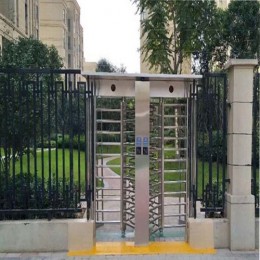

 Double Lane Full Height Turnstile Gate for Residential Area
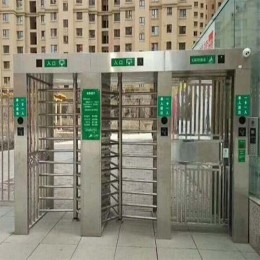
 Dual Lane Tandem Full Height Turnstile Gate for Industry Park
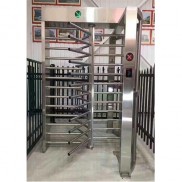 Single Full Height Security Turnstile for Office Buildings
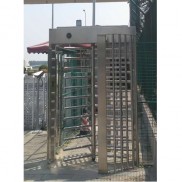 Motorised Double Full-Height Turnstile for Office Buildings
Please leave a message if you are interested in this model