Market Truth About Pedestrian Access Turnstiles: Low-Price Tricks, Quality Gaps, and Market Structure Analysis
With the rapid growth of smart security and intelligent parks, pedestrian access turnstiles have become standard equipment in office buildings, residential communities, construction sites, scenic spots, and many other venues. Market demand continues to rise. However, the current market is flooded with products of vastly different quality—prices range from a few hundred to over ten thousand USD per unit, and the user experience varies just as widely. Some low-cost pedestrian access control turnstile gates jam and give false alarms immediately after installation and are scrapped within a year; others—of decent quality—run stably and durably across multiple scenarios; and premium turnstile pedestrian gates combine intelligence, aesthetics, and long service life, making them the preferred choice for mid-to-high-end applications.
Many users ask: why are the prices and experience so different for essentially the same category of product? The core answer is that low-price turnstiles cut costs by using substandard materials and shoddy workmanship, while standard and premium pedestrian security turnstile access control pursue excellence in components, manufacturing processes, and quality control—with high-end products excelling especially in brand value, design, and environmental adaptability. Based on the current market situation, this article provides an in-depth breakdown of the key differences among low-end, mid-range, and high-end turnstiles, exposes the tricks behind low-priced units and their consequences, analyzes the market share distribution of each tier, explains why low-end products still exist and what drives user psychology, and highlights the core strengths of Lora Intelligent in quality and market positioning.

1. Low-Quality, Low-Price Pedestrian Access Turnstiles: A “Low-Cost Trap” Built on Corner-Cutting, with Consequences Worse Than Imagined
In today’s market, low-price pedestrian access control turnstile gates have secured a certain share purely on the strength of their low prices. But this “low cost” is essentially achieved by reducing material thickness, using inferior components, simplifying processes, and even shrinking dimensions. Behind these practices lie numerous hidden traps, and the eventual costs far outweigh any initial savings.
(1) The ‘Corner-Cutting’ Details of Low-Price Pedestrian Access Turnstiles (Core Tricks)
The fundamental logic of a low-price access control pedestrian turnstile gate is to squeeze every last USD of cost—from core components to external structures, every part is downgraded. Specifics include:
a. Core components: Cheap, low-grade substitutes are used, with no performance guarantee.
Drive unit (the ‘heart’): Instead of proper brushless motors, many use low-power brushed motors from small, unproven factories, costing only 2/5 of a qualified motor. Gear sets are made of ordinary cast iron rather than steel, and are not hardened; meshing precision is extremely poor. Some small manufacturers even omit the lubrication system entirely, relying on ‘dry friction’. To cut costs further, some shrink the drive unit size, reducing motor power from the standard 50–60W to below 30W, making it incapable of handling normal pedestrian flow.
Control board (the ‘brain’): Off-the-shelf low-end motherboards are used, with generic microcontroller chips, no anti-interference design, compact circuit layouts, and often no short-circuit or overload protection components. They do not support basic smart functions like AI anti-tailgating or intelligent self-diagnostics; they only perform simple open/close operations, with recognition response delays of up to 2 seconds, leading to frequent ‘recognition success but no opening’ and false alarms.
Auxiliary components: The cheapest single-point infrared sensors (costing less than USD 2.00) are fitted, with narrow detection range and low sensitivity; detection is often chaotic and can cause pinch injuries. Non-brand, low-quality power supplies lack over-voltage and over-current protection, are prone to short circuits and burnout, and may even create electrical hazards. Terminal blocks use ordinary iron instead of copper, causing poor contact and signal interruptions. Arms are made of low-grade plexiglass that cracks on impact; barriers are hollow injection-molded panels that can pinch pedestrians; and the vertical posts are rolled from thin galvanized iron sheet, less than 0.8 mm thick, and bend on the slightest contact.
b. Materials and thickness: Drastically reduced, eliminating durability.
Housing material: Instead of 304 stainless steel, 201 stainless steel is used, or even lower grades like J2 and J5. Thickness is cut from the standard 1.5–2.0 mm to 0.8–1.0 mm. To save even more, many protective components and structural parts are simply omitted, causing frequent failures, difficult maintenance, and even permanent damage to major parts.
Structural components: Spot welding is used instead of continuous (full) welding, with sparse weld points and no reinforcement; the housing can be wobbled with a gentle push. Structural steel is of poor quality and lacks anti-corrosion treatment, rusting and deforming within 1–3 months of outdoor use, which in turn damages internal parts and leads to repeated faults.
c. Manufacturing processes and quality control: Key steps are skipped, resulting in numerous defects.
Surface finish: Housing edges are dangerously sharp and covered in burrs, easily cutting or scratching operators. Anti-rust pretreatment steps such as pickling and phosphating are omitted; paint is applied directly, resulting in poor adhesion and low acid/chemical resistance. Scratches and surface damage are left untreated.
Quality control: There is no factory inspection; part precision and assembly quality are not controlled during production. Some units leave the factory with loose structural parts or wiring, relying solely on ‘low price’ to attract customers, with no regard for user experience.

(2) The Consequences of Buying Low-Price Pedestrian Access Turnstiles Are Far More Serious Than You Think
Low-price access turnstile pedestrian gates may seem inexpensive upfront, but the later costs—frequent breakdowns, safety hazards, and replacement expenses—far exceed any initial saving.
a. Frequent failures and soaring maintenance costs: Inferior drive units typically suffer from sticking, abnormal noise, or even burnout after 100,000–150,000 cycles. Within 3–6 months, various parts need constant replacement; the annual after-sales and maintenance cost can easily exceed the original purchase price. Control boards often freeze or trigger false alarms, especially during peak traffic, causing congestion and reducing efficiency.
b. Significant safety risks and accident potential: Cheap single-point infrared sensors cannot accurately detect pedestrians, making it easy to pinch the elderly or children—let alone luggage and other objects. Low-quality power supplies are prone to short circuits and failures, posing electrical safety risks. The fragile housing structure can deform or collapse under forced passage, offering little security protection. Many such units lack an emergency power-off release function, so in a fire or other emergency they cannot be opened quickly, creating evacuation hazards.
c. Extremely short lifespan and poor value for money: Low-price access control barrier turnstiles have an average service life of only 1–2 years; some fail repeatedly or are scrapped within a year, requiring new purchases and reinstallation—repeated investments. In contrast, qualified pedestrian gate turnstiles, with proper maintenance, can last 3–8 years without major repairs; Over the long term, the total cost of cheap barrier turnstiles is actually much higher.
d. Poor compatibility and no upgrade path: Generic control boards often cannot interface with facial recognition, visitor management, attendance systems, or other smart modules; as application requirements evolve, the entire automatic pedestrian turnstile must be replaced, increasing expenditure further. Moreover, there is no fault self-diagnosis function, making it very difficult to locate problems and greatly reducing repair efficiency.
(3) Main Installation Areas and Venues for Low-Price Pedestrian Accesa Turnstiles
The target customers for low-price pedestrian turnstile access control gates are those who are extremely price-sensitive and have very low requirements for quality and security. They are concentrated in the following areas:
a. Temporary sites: Short-term construction sites (3–6 months), temporary events (exhibitions, temple fairs), and temporary enclosure areas—where long-term use is unnecessary, and the goal is simply “low cost and barely functional,” with no concern for durability or stability.
b. Low-end premises: Urban village rental housing, small temporary warehouses, simple factories in remote areas, and low-end farmers’ markets—where budgets are tight and requirements for security, intelligence, and durability are minimal; only basic entry/exit control is needed.
c. Opportunistic procurement: Some small property management companies and individual contractors buy cheap turnstiles for older residential compounds or small construction sites to reduce upfront costs and maximize quick profits. When faults occur, they shift blame or switch suppliers, avoiding maintenance responsibility.
d. Remote regions: Small towns and rural areas in third- and fourth-tier cities, where awareness of access control products is limited, market competition is weak, and low prices easily win orders; users there tend to tolerate frequent failures and safety issues.
e. Passing off inferior goods: Some system integrators or trading companies deceive end clients by substituting substandard products for qualified ones, pocketing the price difference.

2. Standard and Premium Pedestrian Access Turnstiles: Pursuing Excellence, Meeting High-End Needs, and Demonstrating Quality Advantages
In contrast to low-quality cheap access turnstiles, standard-quality gate turnstiles (USD 300–1,400 per unit) and premium gate turnstiles (USD 600–3,000 per unit) excel in components, materials, processes, and intelligence. They do not only ensure stable operation but also meet the high-end requirements of various scenarios, offering far better long-term value and representing the mainstream market trend. In line with current industry developments—AI anti-tailgating, high protection ratings, scenario-based customization, etc.—their specific advantages are as follows.
(1) Standard-Quality Turnstiles: Stable and Durable for Normal Applications
Standard-quality pedestrian access turnstiles form the ‘backbone’ of the market, balancing cost and quality to meet most conventional scenarios. Their core advantages include:
a. Components: Qualified parts, stable performance.
Drive unit: Uses brand-new DC brushless motors with power of 50–80W, paired with precision steel gear sets that are heat-treated for high meshing accuracy. A well-designed lubrication system keeps operating noise below 50 dB, with a service life of over 5 million cycles—core components need no replacement for 3–5 years of normal use. Basic overload protection handles light forced-passage attempts.
Control board: Uses new industrial-grade custom chips, with standard circuit design and protection against interference, short circuits, and overload. Supports multiple identification methods including facial recognition, card swiping, and QR codes; response delay is 0.5–1 second, and recognition accuracy exceeds 98%. Basic AI anti-tailgating and self-diagnostic functions detect simple tailgating and display fault codes for easy maintenance.
Auxiliary components: Multiple infrared pairs or light curtains provide wide detection range and high sensitivity, accurately identifying pedestrians and obstacles to prevent pinch injuries. Industrial-grade regulated power supplies from reputable brands offer multiple protections and robust stability. Terminal blocks use high-quality copper for good contact, oxidation resistance, and corrosion resistance. Arms and barriers are made of compliant acrylic and soft rubber; posts are 1.2 mm thick stainless steel and are not easily damaged.
b. Materials and processes: Compliant, with ensured durability.
Housing material: 1.5 mm thick 304 stainless steel or alloy materials, with brushed or sandblasted / fluorocarbon baked paint finish, and pickling/phosphating anti-rust pretreatment to resist rust, corrosion, and peeling. Standard body dimensions and rational internal layout facilitate maintenance and heat dissipation. IP54 rating suits indoor and semi-outdoor environments, effectively blocking dust and rain.
Structural components: Full welding with uniform seams, internal frame reinforcement, and stable housing that resists shaking and deformation. Structural parts are treated against moisture and corrosion, so they do not rust easily outdoors and can withstand moderate external impact.
c. Environmental adaptability and applications: They adapt to most normal scenarios, operating stably from –20°C to 70°C. Typical applications include mid-to-low-end office buildings, residential communities, regulated construction sites, small-to-medium scenic spots, school gates, and ordinary factory areas, meeting routine access control and security needs with good traffic efficiency and reliability.
(2) Premium Pedestrian Access Turnstiles: Intelligent and High-End for Demanding Scenarios
Premium pedestrianturnstiles represent the highest level of the industry, integrating AI intelligence, precision die-casting / CNC manufacturing, and scenario-specific customization. They offer overwhelming advantages in quality, intelligence, aesthetics, and environmental adaptability, aligning with current trends in smart security. Core advantages include:
a. Components: High-end customized parts, outstanding performance.
Drive unit: Uses self-developed or imported servo motors with 80–120W power, paired with high-precision alloy gear sets produced as integral units with extremely high meshing accuracy and smooth, quiet operation (theoretically below 35 dB). Intelligent heat dissipation and dual-seal systems give a service life of over 10 million cycles—core components need no replacement for 8–10 years. Smart overload protection and impact-resistant auto-reset functions stop operation and trigger an alarm when forced passage is attempted, preventing damage, and then quickly reset without affecting traffic.
Control board: Industrial-grade high-performance chips plus proprietary AI control algorithms provide strong anti-interference capability in harsh electromagnetic or dusty environments. Supports AI anti-tailgating (dual detection by AI video algorithms and multiple infrared light curtains, with 99.9% accuracy), live facial recognition (preventing photo/video spoofing), response delay of 0.2–0.3 seconds, and recognition accuracy over 99.8%. Comprehensive fault self-diagnostics and remote monitoring allow real-time status viewing via computer or mobile app, early fault warnings, and remote maintenance.
Auxiliary components: Millimeter-wave radar combined with multiple infrared light curtains provides dual detection, accurately identifying tailgating, forced entry, reverse intrusion, dragging/forgotten luggage, and other behaviors, closing security loopholes. Industrial-grade high-precision regulated power supplies adapt to voltage fluctuations and include lightning and surge protection. Terminal blocks have plated contacts for good conductivity, oxidation resistance, and corrosion resistance, with neat wiring. Arms and barriers use shatterproof tempered glass or aviation-grade acrylic with anti-pinch cushioning; posts are made of high-strength aluminum alloy with anodizing and nano-coating for scratch, corrosion, and rust resistance.
b. Housing appearance and materials/processes: High-end, refined, and suitable for premium environments.
Housing Material: SUS 1.5–2.0 mm thick 304 or 316 stainless steel (316 optional for coastal areas to resist salt-spray corrosion). Some premium models use aluminum alloy combined with acrylic/tempered glass, with precision brushing, sandblasting, or electroplating; multiple polishing steps ensure no weld marks, giving a stylish, high-quality appearance. The design complements the venue’s decoration style, with customizable colors and shapes to enhance the overall ambiance.
Processes: Full CNC laser cutting and CNC grooving/bending provide extremely high precision. Surfaces undergo multiple anti-rust treatments including pickling, phosphating, and passivation, followed by powder coating or electroplating for excellent anti-corrosion properties. Strict QC ensures that every unit is subjected to repeated run tests and fault checks before leaving the factory, guaranteeing zero defects.
c. Environmental adaptability and applications: Exceptional adaptability, with IP65 or higher ratings, operating reliably from –40°C to 70°C—whether in northern cold regions, coastal high-salt environments, dusty construction sites, or outdoor heavy rain. Typical applications include premium office buildings, Grade-A office towers, large airports, high-speed railway stations, high-end residential communities, government buildings, large industrial/mining sites, key scenic spots, and border/customs checkpoints—where high security, intelligence, and aesthetics are required, delivering both efficient access control and a prestigious image.

(3) Intelligent: Premium Quality with Cost-Effectiveness, Leading the Industry
As a company with 15+ year deep experience in the intelligent pedestrian access field, Jayda company accurately captures industry trends. Its product positioning is mid-to-high-end, combining the core advantages of premium turnstiles with self-developed technology and scale production to achieve exceptional cost-performance, making it a benchmark brand in the market. Its strengths directly address current demands:
Self-developed core components with performance far above industry averages: Jayda pedestrian access turnstiles (including speed gate turnstiles, swing gate security turnstiles, flap turnstile gates, tripod turnstile security gates, and full height turnstile barrier gates) all use proprietary high-precision servo drive units, refined through dozens of iterations. Gear sets are integrally formed from high-strength alloy, with 30% higher meshing accuracy, noise below 35 dB, and a service life exceeding 10 million cycles—well above industry norms. The proprietary industrial-grade control board incorporates AI anti-tailgating algorithms, with response as fast as 0.3 seconds and recognition accuracy of 99.8%, accurately detecting tailgating, following, forced entry, luggage carrying, and child passage, eliminating security loopholes.
Excellent materials and processes, strong environmental adaptability: The housing uses SUS 1.5–2.0 mm thick 304 stainless steel (316 optional for outdoor/coastal versions) with precision brushing, full welding, and multiple polishing steps for a seamless, elegant appearance. Dual waterproof and dustproof designs achieve IP65 or higher; salt-spray test duration exceeds 1,000 hours, complying with ISO 9227:2022, making it suitable for coastal high-salt, northern cold, and dusty site conditions. Barrier arms and auxiliary parts are made of premium materials with meticulous detailing for safety and durability.
Scenario-based customization for diverse needs: Jayda supports full-scenario customization, including color, shape, and identification methods (face, card, QR code, etc.), and seamless integration with access control, attendance, visitor, and fire alarm systems for intelligent linkage. Whether speed gates for premium office buildings, access control flap turnstiles for large scenic areas, or tripod turnstile gates for construction sites, Jayda provides tailored solutions widely used in government agencies, smart buildings, large factories, intelligent communities, schools, scenic spots, hospitals, and more.
Strict quality control and comprehensive after-sales support: Jayda’s production strictly follows the ISO 9001 quality management system, and every product undergoes three rounds of inspection before shipment. A professional after-sales team provides remote installation guidance and fault diagnosis, significantly reducing installation delays and ongoing maintenance costs.
3. Why Low-End Inferior Pedestrian Access Turnstiles Still Exist: Market Drivers and User Psychology
Despite frequent failures and prominent safety risks, low-quality cheap access control turnstiles still hold a certain market share. The core reasons are market demand segmentation, information asymmetry, and specific user psychology. These can be analyzed as follows:
(1) Market Drivers for Low-End Turnstiles
Market segmentation: low-end demand objectively exists. Current market demand for access turnstiles is clearly stratified; not every scenario requires high-end intelligent units. Temporary sites, low-end premises, and remote areas have limited budgets and only need basic entry/exit control, with no concern for stability, intelligence, or safety—this creates a niche for cheap turnstiles.
Extremely low production costs and vicious price competition among manufacturers. The production threshold for cheap turnstiles is very low; many small factories lack core technology and strict QC. By sourcing cheap parts, reducing material thickness, and omitting process steps, they can keep the unit cost of some commercial turnstiles below USD 200 and sell them at USD 250–500, making substantial margins. To compete for market share, they undercut each other, further depressing prices.
Information asymmetry and limited user awareness. Most ordinary users (e.g., village housing managers, small farms, small contractors) do not understand core components, materials, processes, or performance metrics, and cannot distinguish good from bad products. They judge only by price, thinking ‘as long as it opens and closes, cheaper is better’, and are easily attracted by low-price gimmicks. Some small factories make false claims, packaging inferior units as ‘high value’ and misleading buyers.
Procurement channel incentives. Some small property firms and contractors prioritize ‘lowest price’, sometimes colluding with small factories to pocket the margin from buying cheap, substandard units, ignoring future performance and safety. These buyers do not bear maintenance responsibility; when faults occur, they pass the buck or replace the units, further encouraging the circulation of cheap turnstiles.
(2) User Psychology Behind Purchasing Low-Price Pedestrian Access Turnstiles
‘Cheap is good’ mentality—pursuit of short-term low cost. This is the most fundamental driver. Users assume that all turnstiles are essentially the same and see no reason to spend more; they choose the cheapest option to minimize upfront expenditure. They focus only on the immediate price and neglect later maintenance and replacement costs—a classic case of “penny wise, pound foolish.”
‘Temporary use’ mindset—no need for long-term investment. Purchasers for temporary construction sites or events believe the pedestrian security gate turnstiles will be needed only for a few months and then discarded. They see no point in buying standard or premium products; ‘barely adequate’ is good enough, and they value only short-term cost-effectiveness, ignoring quality and safety.
Lack of awareness—inability to differentiate quality. Many users do not understand how the drive unit, control board, material thickness, and other factors affect performance. They mistakenly assume that “if the appearance is the same, the performance must be the same” and are swayed by superficial appeal, overlooking hidden internal compromises.
Shifting responsibility—ignoring long-term risks. Some purchasers (e.g., small property firms) buy cheap automated turnstiles and then shift maintenance obligations to others; when faults occur, they delay repairs or blame users, bearing no personal loss. Thus, they care little about quality or reliability.
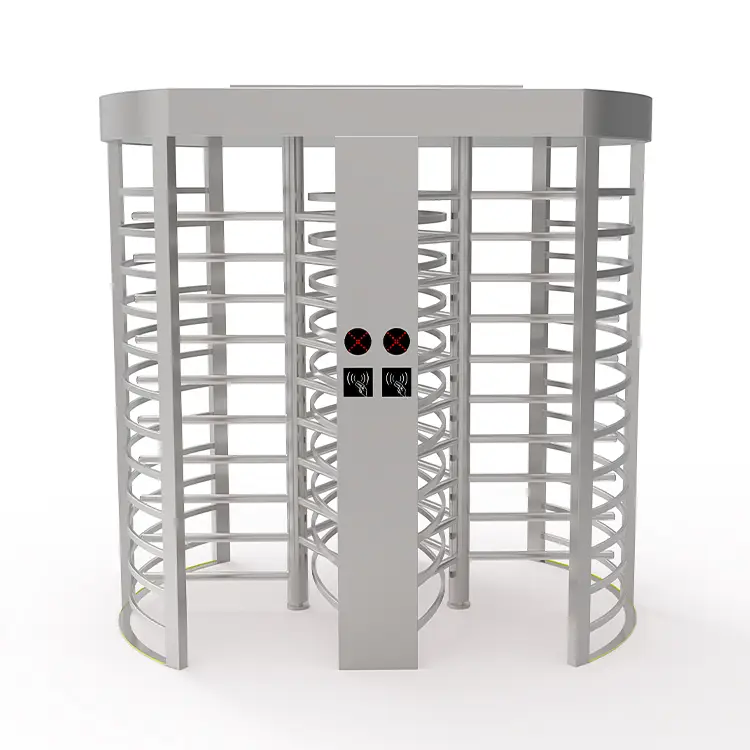
4. Market Share Distribution of Low, Mid, and High-End Pedestrian Access Turnstiles (Multi-Dimensional Perspective)
The current distribution of market share for pedestrian access turnstiles is not determined solely by product quality, but is also influenced by scenario requirements, regional development, procurement budgets, user awareness, and other factors. Using the latest 2026 industry data, we analyze the share of each tier and its distribution logic from multiple dimensions:
(1) Overall Market Share (by Unit Sales)
The market currently exhibits a pattern of ‘large low-end share, mid-range as mainstream, premium growing fast’, with specific shares as follows:
Low-end cheap pedestrian access turnstiles: Approximately 45%, mainly produced by small factories and workshops, with prices concentrated at USD 200–500 per unit. Their core advantage is extremely low price, primarily occupying temporary sites, low-end premises, and remote areas—high volume but low margins, and their share is declining year by year as user awareness rises and security requirements increase.
Standard-quality pedestrian access turnstiles: Approximately 40%, the current mainstream force, produced mainly by mid-tier domestic brands, with prices at USD 300–1,400. They balance quality and cost, suit most conventional scenarios, have stable sales and moderate margins, and their share is steadily increasing—the core pillar of industry development.
Premium pedestrian turnstiles: Approximately 15%, mainly produced by well-known brands, priced above USD 1,400. Their core advantages are intelligence, stability, and high-end appeal, fitting demanding scenarios. Although unit volume is lower than mid/low tiers, margins are high; with the growth of smart security and high-end parks, their share is the fastest-growing and is expected to reach over 25% in the next 3–5 years.
(2) Multi-Dimensional Market Share Breakdown (Non-Product Factors)
a. By scenario:
High-end scenarios (premium offices, airports, high-speed rail stations, government buildings): Premium ≈80%, standard ≈20%, low-end nearly zero. These venues have very high demands for security, intelligence, and appearance, and are willing to invest in premium products; the top domestic premium brands have strong penetration here.
Conventional scenarios (ordinary offices, mid-range residential, regulated construction sites, small-to-medium scenic spots): Standard ≈70%, premium ≈15%, low-end ≈15%. These scenarios prioritize stable durability and moderate cost-performance; standard units are the first choice, with some budget-conscious users choosing premium.
Low-end scenarios (urban villages, temporary sites, small warehouses, remote towns): Low-end ≈90%, standard ≈10%, premium virtually none. Very limited budgets and minimal quality requirements make cheap units the only option.
B. By procurement entity:
Corporate procurement (large enterprises, state-owned companies, listed firms): Premium ≈40%, standard ≈60%, no low-end. They have sufficient budgets, value security, quality, and after-sales support, and prefer mid-to-high-end products with good brand reputation.
Property management companies: Standard ≈50%, low-end ≈40%, premium ≈10%. Choices depend on the grade of the community and resident budgets: premium for high-end communities, standard for mid-range, cheap for low-end.
Individual procurement (village committees, small contractors): Low-end ≈85%, standard ≈15%, no premium. Budgets are limited, costs are the primary concern, and attention to quality and safety risks is low.
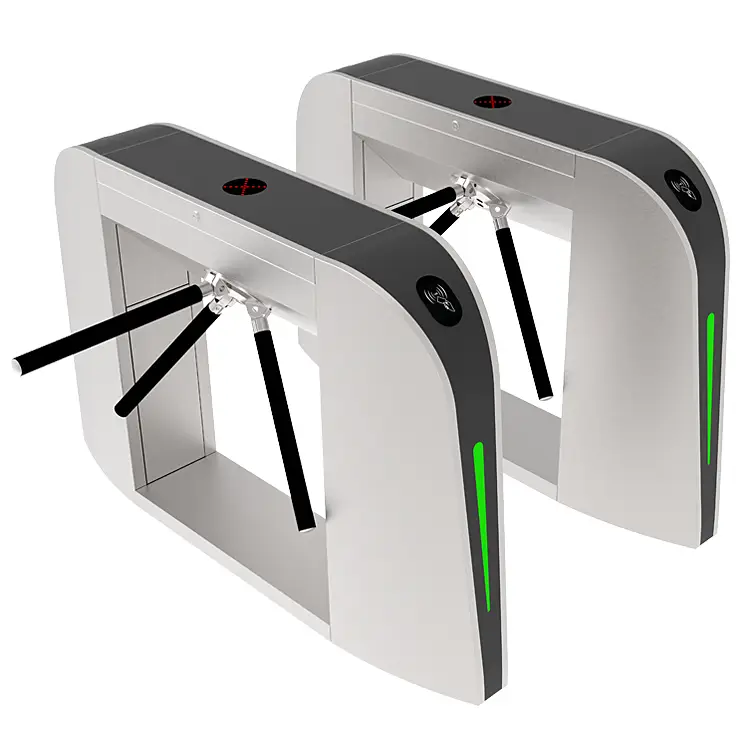
(3) Market Share Trends
In the future, the market share of pedestrian access turnstiles will increasingly shift toward the mid-to-high end. Specific trends include:
Low-end electronic turnstile gate share will continue to decline as user awareness rises, security requirements tighten, and regulations on substandard products strengthen; small manufacturers will gradually be eliminated, and cheap units will survive only in a few temporary or remote applications.
Standard-quality motorized turnstiles will maintain mainstream status, becoming the preferred choice for most conventional scenarios, with share stabilizing at 45–50%.
Premium modern turnstile share will rise rapidly, driven by smart security, high-end parks, and smart city development; demand for intelligent, premium, and stable turnstiles will increase. Premium brands will leverage technology and quality advantages to further expand their share and lead the industry.
5. Conclusion: Choose Wisely—Reject Low-Price Traps, Balance Quality and Value
The current disorder in the pedestrian access turnstile market essentially reflects a trade-off between cost and quality. The ‘cheapness’ of low-price turnstiles hides corner-cutting tricks and undeniable safety risks. While they may appear to save money in the short term, they ultimately prove costly and counterproductive. Standard-quality turnstiles balance cost and stability and are the value-for-money choice for most conventional scenarios. Premium turnstiles, with their intelligence, high-end design, and long service life, meet demanding applications and enhance the prestige of any venue.
From a market-structure perspective, moving toward mid-to-high-end products is an inevitable industry trend. When procuring, users should avoid the ‘cheapest is best’ mindset and, based on their actual scenario and budget, prioritize standard or premium products—especially in applications where security and reliability matter. Do not buy inferior cheap pedestrian access control turnstiles just to save short-term costs; doing so not only leads to frequent breakdowns and soaring maintenance costs but also creates serious safety risks.



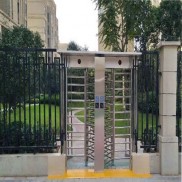 Double Lane Full Height Turnstile Gate for Residential Area
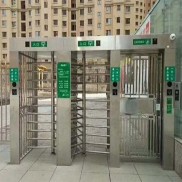 Dual Lane Tandem Full Height Turnstile Gate for Industry Park
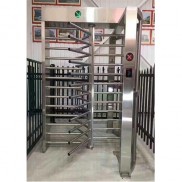 Single Full Height Security Turnstile for Office Buildings
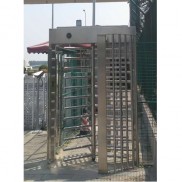 Motorised Double Full-Height Turnstile for Office Buildings
Please leave a message if you are interested in this model