Why Some Turnstyle Gates Work Reliably While Others Constantly Break Down ?
90% of after-sales issues are not due to the turnstyle gates being “worn out,” but rather “mismatched specifications” and “shoddy execution.”
There’s a frustrating reality in the security industry: turnstyle gates are widely seen as “low-threshold devices,” yet they generate the highest after-sales service rates for installers and integrators. Take two identical-looking flap barrier turnstiles, swing optical turnstiles, or tripod barrier gate turnstiles installed in neighboring residential complexes or industrial parks, their performance and lifespan can be worlds apart. One runs steadily for 5~10 years, with almost no jams, false alarms, or complaints. While, the other, just past its one-year warranty, suffers frequent crashes, pinching incidents, false openings, tailgating failures, and erratic access control integration.
Many installers and distributors instinctively blame cheap products or manufacturers cutting corners. But seasoned industry professionals know the real gap has never been about sheet metal thickness or surface-level build quality. 90% of recurring failures are not from normal wear and tear—they stem from hidden defects present before delivery, severe scenario mismatches, and incompatible electromechanical systems.
Today, let’s move past generic spec sheets and dive into the industry’s underlying truths. We’ll reveal the key differentiators between good and bad turnstiles and help installers eliminate after-sales headaches for good.

1. The Biggest Misconception: It’s Not That the Device Isn’t Durable – It’s a Mismatch Between Selection and Operating Conditions
The first mistake in common problem is using consumer-grade, low-duty equipment to handle industrial-grade, high-frequency conditions. This is the most overlooked yet most critical root cause.
Low-cost turnstile doors often look good on paper, but they are essentially generic units designed for indoor, normal-temperature, low-frequency use—suitable only for light pedestrian traffic in residential complexes. When deployed in factory shift peaks, school crowds, or all-day park access, they instantly become overloaded. The result: low-frequency motors forced into high-frequency use, indoor units exposed to outdoor elements, lightweight structures battered by heavy traffic. Motors overheat, algorithms get overwhelmed, sensors misread, and mechanical parts wear out rapidly. This isn’t a quality issue—it’s systemic premature aging caused by scenario mismatch. Many vendors sell only generic models without scenario adaptation, leaving installers and end-users to bear the consequences.
2. Core Difference: Good vs Poor Turnstile Gates Aren’t About Components – They’re About Electromechanical Synergy
Amateurs judge morden turnstiles by appearance and sheet metal; professionals judge them by electromechanical match quality. The common flaw of low-end assemblers: a ‘parts-puzzle’ mentality. Motors, mainboards, sensors, and transmission structures are all off-the-shelf generic components without compatibility testing. Individually, each part may work, but mismatched parameters and incompatible operating logic lead to troubles:
Motor speed and mainboard instructions out of sync
Sensor sensitivity misaligned with mechanical start/stop
Buffer logic incompatible with transmission travel
They result in false pinch alarms, tailgating misjudgments leading to sudden locking, and harsh start-stop impacts that progressively damage the mechanism. The more you use it, the more problematic it becomes.
Reliable industrial-grade turnstile barrier gates don’t rely on a single high-end component; their core advantage lies in holistic system tuning. The main control algorithm is tailored to motor torque, start/stop speed matches mechanical travel, and sensing range is synchronized with gate movement. The entire system operates as a closed-loop, coordinated unit.
In short: a no-name barrier turnstile is a collection of parts—reliability is a gamble. A quality pedestian turnstile is an integrated system—stability is engineered.

3. The Hidden Trap: Widespread Parameter Overstatement and Compute Power Reduction
This is the industry’s biggest trick and a primary cause of frequent after-sales issues. Many low-cost access control turnstyle gates claim “10 million cycles” and “24/7 operation,” but in reality, they are severely compromised: low-end trimmed chips, stripped-down algorithms, and under-spec circuit boards. They seem feature-rich but suffer from inadequate processing power.
Under light loads and low traffic, problems don’t show. But during peak flow, multi-device coordination, voltage fluctuations, high temperatures, or humidity, the weaknesses emerge:
Command pile-ups cause crashes and restarts
Recognition delays cause random gate openings
Poor interference immunity triggers false alarms
Circuitry shortcuts lead to leakage or malfunction in wet conditions
Reputable manufacturers achieve stability through honest, uncompromised industrial-grade specifications: separate master/slave board design for interference rejection, wide-temperature tolerance, surge/ESD protection, and ample compute headroom. Even under sustained high-frequency, full-load operation, the system remains orderly and reliable, preventing batch failures at the source.
4. Invisible Lifespan Factor: Mechanical Pre-Break-In and Assembly Tolerances
Why do some new access turnstiles work fine for the first three months and then quickly fall apart? The answer lies in assembly tolerances and factory break-in. Small factories prioritize speed. Loose part tolerances, inconsistent screw torques, uncalibrated transmission gaps, and no pre-break-in of the mechanism. Newly shipped units barely mesh properly. After some use, gaps widen, misalignments increase, leading to abnormal noises, jamming, poor gate return, and uneven speed on each side.
Industrial-grade production follows a different standard: all mechanical structures undergo full pre-run calibration, gap adjustment, and force balance tuning before leaving the factory. All initial wear, misalignments, and gap deviations are resolved at the factory, preventing defects from reaching the project site. That’s why quality gate turnstiles get smoother over time, while poor ones become increasingly difficult to use.
5. Overlooked Failure Source: Wiring Craftsmanship and Environmental Resilience
Half of soft failures in security turnstiles aren’t due to hardware damage but messy wiring and lack of protection.
Typical workshop assembly flaws: mixed high and low voltage wiring, tangled wire bundles without fixation, non-waterproof connectors, and no strain relief. In dry indoor conditions, they might work. But with outdoor rain, construction dust, summer heat, or day-night temperature swings, problems appear: cable aging, shorts, intermittent contact, signal interference.
These are the most painful failures: intermittent, unreproducible, hard to diagnose. They consume endless after-sales time and damage reputations.
Standardized manufacturers use clean wiring practices: separate high/low voltage paths, fixed and restrained wire bundles, waterproof/dustproof connectors, and strain relief. This physically eliminates 80% of soft, hidden failures, enabling equipment to perform reliably in diverse, harsh conditions.

6. Shipping and Quality Control: Many Units Leave the Factory Defective and Arrive Damaged
A large number of failing electric turnstiles aren’t worn out—they were defective from day one or damaged in transit.
Small factories lack rigorous QC. They assemble, power on, and ship. Subtle jams, sensor misalignment, loose soldering, mechanical offsets—all these hidden issues are passed on. Add poor packaging, and during long-haul shipping, screws loosen, cables detach, and mainboards get damp. The equipment arrives in a bad state, ensuring future failures.
Trusted brands rely on end-to-end QC: component sampling, in-process inspections, full-unit high-frequency simulation testing, temperature and humidity testing, and ingress protection testing. Defective units are found at every step. Standardized, shockproof, moisture-proof packaging prevents secondary damage, ensuring every delivered unit is fully functional.
Finally: Stable Turnstyle Turnstiles Are Never About Low Price – They’re About “No Weak Links”
Once you understand the underlying logic, it’s clear: frequent turnstyle gates failures are never a single quality issue, but a cumulative result of scenario mismatch, electromechanical imbalance, overstated specs, process shortcuts, and lack of QC.
What low-cost equipment saves on—algorithm headroom, system tuning, precision break-in, rigorous QC, environmental resilience—ends up costing installers in endless after-sales repairs, rework, and poor reviews.
Jayda Company, with deep expertise in self-developed, precision-manufactured pedestrian turnstiles, always prioritizes scenario adaptation as the foundation, electromechanical synergy as the core, and process/QC as the bottom line. We don’t make generic assembled units or overstate specifications. Every bi-directional turnstile undergoes scenario-specific tuning, full-unit pre-break-in, and comprehensive quality checks. Our focus on low failure rates, low maintenance, and high stability helps installers eliminate after-sales headaches—smooth project delivery, faster payments, and lasting reputation.


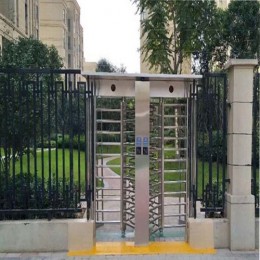

 Double Lane Full Height Turnstile Gate for Residential Area
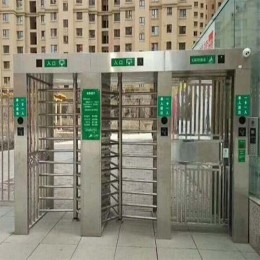
 Dual Lane Tandem Full Height Turnstile Gate for Industry Park
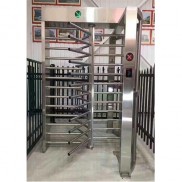 Single Full Height Security Turnstile for Office Buildings
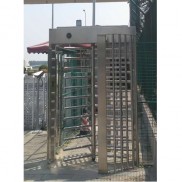 Motorised Double Full-Height Turnstile for Office Buildings
Please leave a message if you are interested in this model