The Appication of Smart security turnstiles in Modern Scenic Spots
As the cultural tourism industry recovers, entrance ticketing management has become a core link affecting scenic spot operational efficiency, user experience, and brand image. While purely manual ticketing models have largely exited the mainstream stage, many scenic spots remain constrained by the ‘isolated operation’ challenge of outdated security turnstiles. The upgrade and application of smart security turnstiles are now reshaping the entrance management ecosystem of scenic spots. With its highly efficient and convenient verification capabilities, sleek and elegant design, and exceptional compatibility with various management systems, Smart security turnstile gates have emerged as one of the ‘efficiency champions’ and ‘faces of the venue’ for modern scenic spot ticketing verification. This article, drawing on publicly available real-world data, provides an in-depth analysis of the core issues in current scenic spot ticketing management, compares the operational transformations after integrating smart security gate turnstiles into management systems, and details selection channels and turnstile types, offering practical reference for scenic spots considering turnstile upgrades and selection.
1.Pinpointing the Pain Points: Core Challenges in Current Scenic Spot Ticketing Management (with Real Data)
According to publicly available data from cultural tourism industry reports, approximately 89% of domestic scenic spots are currently equipped with pedestrian smart security turnstiles, with purely manual ticket inspection models existing only in a very small number of small scenic spots, where it has been relegated to a supplementary role. However, the core pain point lies in the fact that most scenic spots use aging equipment installed over the past 5-10 years. These technologically outdated devices not only fail to achieve deep integration with the scenic spot’s ticketing management, visitor flow statistics, security control, and other systems, but also cannot be retrofitted with facial recognition equipment. Some even serve merely as physical barriers, creating an awkward ‘isolated equipment’ situation. The core pain points are concentrated across four dimensions—efficiency, cost, management, and experience—with specific data and current status evidence as follows:
(I) Insufficient Ticketing Verification Efficiency, Persistent Peak-Time Congestion
Although most scenic spots are currently equipped with ticketing turnstiles, they are limited by the technological shortcomings of aging equipment and can only perform basic ticket checking functions, with verification efficiency remaining inadequate. These outdated, non-integrated security turnstiles take over 1 second per passenger verification, with a single lane handling only 300-400 people per hour—far below the level of smart integrated turnstiles. Moreover, extended usage has led to higher failure rates, making peak-hour congestion a prominent issue. Data from a 5A-level lake scenic spot shows that its 6-year-old ticketing turnstiles often result in entrance queues exceeding 300 meters during holiday peak periods, with an average wait time of over 30 minutes, frequently leading to complaints and ticket refunds due to congestion. Additionally, some outdated automated turnstiles lack precise verification functions, making them prone to missed or incorrect checks, and even pose safety risks such as pinching injuries. At a water park in China, outdated pedestrian access control turnstiles once failed to identify invalid tickets, resulting in over 200 invalid tickets being mistakenly accepted in a single day, causing direct economic losses exceeding USD 6,000.
(II) High Operational Costs and Severe Resource Waste
Outdated, non-integrated security turnstiles cannot achieve automated management. Even with equipment in place, scenic spots still need to deploy significant manpower for auxiliary ticket checking and verification, preventing effective cost reduction. Scenic spots staff auxiliary checkers based on peak-season demand, with each person earning a monthly salary of USD 1,000. A medium-sized scenic spot with an annual visitor volume of 500,000 still incurs over USD 25,000 in ticket-related labor costs annually. Meanwhile, some outdated turnstiles only support paper ticket verification. The printing and storage of paper tickets not only generate direct costs but also often result in secondary losses due to loss or damage. More concerningly, outdated turnstiles cannot integrate with ticketing management systems, forcing ticket data to rely on manual collation and statistics. This not only adds to labor costs but also introduces data errors and time lags, compromising the accuracy of operational decision-making.
(III) Chaotic After-Sales Management and Weak Risk Prevention
Most aging security gate turnstiles in scenic spots have passed their warranty periods, and some manufacturers have ceased production, switched industries, or even gone out of business, leading to a lack of professional after-sales support. Equipment failure response times often exceed 48 hours, and in some cases, failures cannot be repaired at all, causing repeated short-term entrance paralysis and seriously impacting normal operations. At the same time, outdated turnstiles lack a robust after-sales traceability system. When disputes arise due to ticketing verification failures or cumbersome manual interventions, the average resolution time reaches 40 minutes, and the root cause (such as turnstile malfunction or ticketing information errors) cannot be precisely identified, easily triggering visitor dissatisfaction. Furthermore, the outdated verification technology of these turnstiles cannot effectively detect counterfeit or reproduced tickets, allowing scalpers to exploit this loophole by selling fake or copied tickets at markups of 30%-50%. This not only causes revenue loss for the scenic spot but also exacerbates chaos in entrance management.
(IV) Poor User Experience and High Complaint Rates
Online complaint data shows that ticketing-related complaints account for 21.7% of all scenic spot complaints. Among these, categories such as ‘turnstile lag,’ ‘cumbersome verification,’ ‘difficulty purchasing tickets,’ ‘inconvenient refunds,’ and ‘split-ticket counting’ are prevalent, with the first two alone accounting for 12%. The root causes of these issues all point back to manual ticket inspection and outdated non-integrated turnstiles. At a historic scenic spot, frequent turnstile lag and slow verification once caused a 200% surge in single-day complaint rates. In some scenic spots, outdated turnstiles cannot accommodate multiple verification methods such as facial recognition or QR codes, making operations difficult for elderly visitors or those without smartphones. Monthly complaint volumes remain persistently high, severely damaging brand reputation. At the same time, outdated turnstiles lack frictionless passage functionality, requiring visitors to repeatedly present tickets and identification—a cumbersome process that fails to meet modern visitors’ expectations for “convenient and efficient” access, further diminishing the overall experience.
1. Comparative Analysis: Operational Transformation After Integrating Smart Security Turnstiles into Management Systems
Targeting the various pain points of outdated non-integrated outdoor turnstiles, smart pedestrian security turnstiles can be seamlessly integrated into ticketing management systems,establishing a closed-loop ‘verification-data-management-after-sales’ process. Compared with current mainstream outdated non-integrated turnstiles and some generic mainboard devices, smart turnstiles demonstrate significant advantages across six core dimensions: system integration, operational stability, verification efficiency, operational costs, after-sales management, and complaint rates. However, they also present a phased drawback in terms of initial investment. The specific comparative analysis is as follows:
(I) Verification Efficiency: From “Congestion and Delays” to ‘Frictionless Passage’
Advantages: Smart Security Turnstiles support multimodal verification including facial recognition, QR codes, ID cards, and passports, catering to diverse visitor needs. Single-passenger verification takes only 0.5 seconds, with a single lane handling 800-1,200 people per hour—1-2 times more efficient than outdated non-integrated turnstiles. Additionally, increased throughput can reduce the number of lanes required, achieving cost reduction goals.
At a 4A-level botanical garden, after the upgrade, peak single-day verification volume exceeded 15,000 visits, and visitor queue times were reduced from 30 minutes to under 20 minutes. The ticketing turnstile system also supports multi-lane coordinated scheduling, adjusting the number of open lanes based on real-time visitor flow, thoroughly alleviating peak-hour congestion. Furthermore, the use of ‘one ticket, one code + dynamic QR code’ electronic technology effectively prevents ticket screenshot and duplication, reducing the proportion of scalper tickets from 18% to below 1%, fundamentally eliminating counterfeit and duplicated tickets.
(II) Operational Costs: From ‘Labor Dependence’ to ‘Cost Reduction and Efficiency Enhancement’
Advantages: After integration with the turnstile management system, automated verification and data statistics functions can reduce ticketing labor requirements by 70%-80%. A medium-sized scenic spot can save USD 50,000 in labor costs annually. The system also supports e-ticketing, eliminating the need for paper ticket printing and storage costs, saving an additional USD 80,000 per year, while avoiding secondary losses from lost or damaged tickets. Additionally, the system provides real-time visitor flow and ticketing data statistics, automatically generating reports, completely eliminating manual data collation, reducing data errors, and enabling precise management of distribution channels to prevent revenue leakage.
Smart Security Pedestrian Turnstiles feature reinforced 304 stainless steel casings with a protection rating of no less than IP54. The core turnstile mechanism has a lifespan exceeding 10 million cycles, with a long mean time between failures (MTBF), significantly reducing equipment repair and replacement costs and easing the scenic spot’s operational burden in the long run.
Disadvantages: The initial equipment procurement and system integration investment is relatively high. Compared with continuing to use outdated turnstiles, the upfront financial pressure is greater, requiring scenic spots to plan their budgets accordingly.
(III) After-Sales Management: From ‘Chaos and Disorder’ to ‘Precision and Efficiency’
Advantages: Smart Security Turnstile Barrier Gates come with a dedicated after-sales support team offering 24-hour failure response. On-site repairs within 4 hours for local scenarios and remote network after-sales support within 2 hours can resolve over 80% of system faults, effectively preventing scenic spot entrance paralysis. The system automatically records equipment operation data and verification logs, allowing precise root-cause identification (such as ticketing errors, equipment faults, or human error) when issues arise. After-sales resolution cycles are shortened to just over ten minutes, several times more efficient than the outdated turnstile era. At the same time, the automatic turnstile system supports remote upgrades and debugging without requiring on-site shutdown, ensuring no disruption to normal operations. It can also integrate with fire control systems, automatically opening turnstiles in emergencies to facilitate personnel evacuation, further enhancing management safety.
Disadvantages: After-sales maintenance relies on professional teams. If the scenic spot is located in a remote area, response times may be longer. Some older scenic spots may need to upgrade infrastructure (such as network and electrical systems) first to ensure smooth system integration, which will entail some additional costs.
(IV) Complaint Rates: From ‘Persistently High’ to ‘Significantly Reduced’
Advantages: The frictionless passage and rapid verification model greatly enhance visitor experience, with ticketing-related complaint rates dropping by over 95%. At one scenic spot deploying Smart Securit Access Turnstiles, monthly ticketing complaints fell from 18 to under 10, while visitor satisfaction rose from 73% to 87%. The system also helps avoid complaints arising from poor communication, and combined with AI behavior analysis, can identify abnormal operations such as ‘frequent ticket swiping’ or ‘proxy checks,’ further reducing disputes.
Disadvantages: In the event of network interruptions or temporary equipment lag, short-term entrance congestion may occur, potentially triggering localized complaints. Some visitors may have privacy concerns regarding facial recognition and other verification methods, requiring the scenic spot to provide clear explanations and guidance to address these worries.

III. Selection Channel Analysis: How to Choose Among Manufacturers, Distributors, and Channel Partners?
When upgrading or procuring smart security turnstiles, scenic spots typically have three main channels: direct manufacturer purchase, purchasing through distributors, or purchasing through channel partners. Each varies in pricing, service, after-sales support, and delivery lead times. The choice should be based on the scenic spot’s scale, budget, actual needs, and information sources. The detailed analysis is as follows:
Direct Manufacturer Purchase
Advantages: Significant price advantage with no intermediary markups. For the same configuration, prices are lower than through distributors or channel partners, making this suitable for large scenic spots (purchasing 5 or more units), resulting in substantial procurement savings.
Strong customization capabilities. Manufacturers can tailor solutions based on the scenic spot’s specific needs (such as appearance design, verification methods, and system integration). For example, scenic spots can customize designs incorporating their own cultural elements, perfectly matching the upgrade needs of older venues.
Better after-sales support. Direct access to the manufacturer’s after-sales team eliminates intermediaries, ensuring faster fault response and repair efficiency, along with long-term system upgrade support.
Stable supply. Manufacturers can guarantee delivery lead times, avoiding project delays due to stock shortages, making them especially suitable for bulk purchases and emergency replenishment.
Disadvantages: Higher procurement threshold. For small scenic spots (purchasing 2 or fewer units), manufacturers may not offer favorable pricing or may even decline small orders.
Higher communication costs. Direct interaction with the manufacturer’s technical and sales teams may require more time to communicate needs, especially for procurement staff lacking specialized knowledge.
Geographical limitations. If the manufacturer is located far away, on-site commissioning and repair travel times may be longer, adding modest extra costs.
Suitable Scenarios: Large scenic spots with larger procurement volumes (≥5 units), customization needs, sufficient budgets, and a focus on long-term after-sales support and system upgrades—especially those upgrading from outdated turnstiles.
(II) Purchasing Through Distributors
Advantages: Low procurement threshold. Small scenic spots (purchasing 1-2 units) can also be accommodated, with convenient communication. Distributors offer one-on-one consultation to help sort out requirements, eliminating the need for direct manufacturer interaction and saving communication costs.
Short delivery lead times. Distributors typically keep stock, enabling rapid dispatch, installation, and commissioning—ideal for urgent upgrades or replacements of outdated turnstiles.
Comprehensive supporting services. Distributors can provide one-stop services including on-site installation, commissioning, and staff training, addressing subsequent usage challenges—especially beneficial for small scenic spots lacking professional technical teams.
Disadvantages: Higher prices. Distributors need to earn a margin, so for the same configuration, prices are higher than from manufacturers, making bulk purchases more costly.
Limited customization. Distributors typically offer only standard manufacturer products and cannot accommodate personalized requirements. If customization is needed, communication must go through intermediaries, which is inefficient and may incur additional costs.
After-sales dependence on distributors. If the distributor-manufacturer relationship is unstable, after-sales response may be delayed, and system upgrades or part replacements must go through the distributor, lengthening cycles and potentially delaying resolution of post-upgrade issues.
Suitable Scenarios: Small scenic spots with low purchase volumes (1-2 units), no customization needs, a focus on convenience, and limited budgets with urgent requirements—primarily for replacing outdated turnstiles.
(III) Purchasing Through Channel Partners
Advantages: Abundant resources. Channel partners typically collaborate with multiple manufacturers, offering products from various brands and models for comparison, saving scenic spots from having to contact multiple manufacturers individually—especially beneficial for those unfamiliar with turnstile types and brands.
Moderate pricing. Prices are lower than through distributors but higher than direct from manufacturers, balancing cost-effectiveness with convenience.
Flexible services. Channel partners can integrate manufacturer resources to provide tailored solutions based on scenic spot needs, such as simultaneously integrating ticketing and security systems for unified management—suitable for complex upgrade scenarios at older scenic spots.
Disadvantages: Inconsistent after-sales quality. Channel partners may lack in-house repair capabilities or have weaker after-sales support, needing to coordinate with manufacturer after-sales through multiple layers, resulting in lower fault response and repair efficiency than direct manufacturer engagement.
Product quality risks. Some channel partners, seeking higher profits, may push low-end machines, thin-gauge steel, or substandard components, requiring careful scrutiny by the buyer to avoid compromising post-upgrade operations.
Slower customization response. Customization requests must go through intermediaries to the manufacturer, leading to longer cycles and potential miscommunication of requirements, affecting final outcomes.
Suitable Scenarios: Medium-sized scenic spots with purchase volumes of 3-4 units, a need for cost-effectiveness, a desire to compare multiple brands, and relatively complex requirements (such as multi-system integration) but without high-end customization needs—and with plans to upgrade outdated turnstiles.
Smart security turnstiles for scenic spots mainly fall into four categories: flap barrier turnstiles, speed turnstile gates, optical swing turnstiles, and tripod barrier gates. These types differ significantly in throughput speed, safety, applicable scenarios, and pricing. Drawing on real usage cases from domestic and international scenic spots and market evaluations, the following presents data comparisons and case analyses to clearly illustrate the pros, cons, and suitable scenarios for each type (data sourced from the 2025 Industry White Paper and public case studies), providing a reference for scenic spots upgrading outdated turnstiles:
Core Data Comparison Table for the Four Turnstile Types
| Turnstile Type |
Verification Time per Person |
Hourly Throughput per Lane |
| Flap Barrier Turnstile |
0.5-1 sec |
800-1,200 people |
| Speed Turnstile Gate |
0.5-1 sec |
800-1,200 people |
| Optical Swing Turnstile |
0.7-1.5 sec |
600-800 people |
| Tripod Barrier Gate |
0.7-1.5 sec |
400-500 people |
Detailed Analysis of Each Turnstile Type
1. Flap Barrier Turnstile: Efficiency Leader, Best Value for Scenic Spots
Flap turnstile gates are currently the most commonly used turnstile type in scenic spots, balancing efficiency, safety, and aesthetics. They are also one of the preferred models for upgrading outdated turnstiles. Flap gate turnstiles are powered by brushless motors, achieving ‘zero-impact’ opening and closing with silent operation. They are suitable for most indoor and outdoor scenic spot scenarios and can seamlessly integrate with various ticketing management systems, perfectly resolving the ‘isolated operation’ pain point of outdated turnstiles. Their core advantages include high throughput efficiency, excellent anti-tailgating performance, strong anti-vandalism features, and a robust, dignified appearance that can be integrated into various scenic spot designs. The pricing is moderate, offering outstanding cost-performance.
Disadvantages: The lane width is relatively narrow (approximately 50–60 cm), making it impossible to accommodate wheelchairs, strollers, or bulky luggage, requiring supplementary accessible passages. The installation environment requires relatively high standards; outdoor use demands good waterproofing and dustproofing, preferably with a canopy.
Suitable Scenarios: Main entrances of scenic spots, park entrances, school main entrances, indoor venues (such as museums, libraries, science and technology museums, gymnasiums, etc.) with high foot traffic, a focus on throughput efficiency and visual appeal, and no significant need for bulky item passage.

2. Speed Turnstile Gate: ‘Perfect Blend of Efficiency and Aesthetics’ for High-End Scenarios
Speed turnstile gates emphasize ‘frictionless passage’ and are the top choice for high-end scenic spots and parks, suitable for venues prioritizing throughput efficiency and brand image. They are also a core selection for upgrading outdated turnstiles in premium scenic spots.
Speed gate turnstiles feature servo / brushless motors for smooth, quiet operation, with optional grating/light curtain/millimeter-wave radar configurations providing advanced safety protection. They support all verification modes including facial recognition, fingerprint, iris, QR code, ID card/passport, and can be seamlessly integrated with scenic spot management systems for highly coordinated operation. With a strong technological aesthetic and elegant design, they perfectly align with the smart upgrade needs of high-end venues.
Disadvantages: The price is high, typically 2–3 times that of wing gates, making the initial investment substantial and suitable only for well-funded projects.
Suitable Scenarios: High-end scenic spot passages, premium industrial park entrances, airports, customs, office towers, luxury residential communities, and high-end clubs where brand image and premium passage experience are paramount—ideal for well-funded venues looking to upgrade outdated turnstiles.

3. Optical Swing Turnstile: Flexible and Compatible, the Accessible Passage Expert
The core advantage of optical swing gates is their adjustable lane width (up to 1.5 meters) and strong compatibility, accommodating pedestrians, wheelchairs, strollers, bulky luggage, and other diverse passage needs—especially suitable for scenic spots with special visitor groups.
Smart Swing Gates feature infrared and mechanical dual anti-pinch protection, ensuring safe passage. They are easy to customize and integrate into various environments, and can seamlessly connect with ticketing management systems to resolve the inability of outdated swing gates to achieve system integration.
Disadvantages: Throughput efficiency is slightly lower than flap turnstile gates and speed turnstile gates. Suitable Scenarios: Accessible passages in scenic spots, logistics passages, staff entrances in cultural venues, main entrances of nursing homes, etc.—with a focus on accessible passage for wheelchairs, strollers, and bulky luggage, offering good cost-effectiveness and suitable for replacing outdated accessible turnstiles.

4. Tripod Barrier Gate: Economical and Durable ‘Basic Choice’
Tripod turnstile barrier gates are the most basic and economical turnstile type, with a simple, rugged, and durable structure and excellent physical anti-tailgating performance. They are suitable for scenarios with limited budgets and low requirements for throughput efficiency and visual appeal, and are also a preferred choice for upgrading outdated triple-roller gates or supplementary installation in purely outdoor settings. Tripod turnstile gates are made of 304 stainless steel with IP45 waterproof and dustproof rating, adapting to harsh weather including rain, snow, and extreme heat. They support various verification methods, are low-cost, and can integrate with ticketing management systems, resolving the inability of outdated triple-roller gates to verify tickets and synchronize data.
Disadvantages: Lowest throughput efficiency (requires manual push, longest passage time per person) and average user experience. The narrow lane cannot accommodate bulky items or wheelchairs. The design is somewhat industrial, potentially affecting environmental integration.
Suitable Scenarios: Main entrances of small scenic spots, seaside scenic spot entrances, staff entrances, construction site entrances. Suitable for budget-constrained scenarios prioritizing anti-tailgating and anti-fare-evasion, with lower demands on throughput efficiency and aesthetics. Outdoor settings are preferred. Ideal for replacing outdated triple-roller gates.

Conclusion: Smart Security Turnstile – The Optimal Solution for Modern Scenic Spots and Parks
In summary, the ticketing management challenges faced by today’s scenic spots and parks have evolved from the inefficiency and complexity of manual ticketing to the ‘isolated operation’ dilemma of outdated non-integrated barrier turnstiles—equipment that cannot integrate with management systems, suffers from low efficiency, lacks after-sales support, and delivers poor user experience, severely impacting operational efficiency and brand image. The upgrade to smart security turnstiles not only effectively resolves these core issues but also enhances the venue’s brand image, making them the ‘efficiency champion’ and ‘face of the venue.’ With its multimodal verification, efficient after-sales support, flexible customization, and high compatibility with various management systems, Smart Security Turnstile perfectly meets the ticketing upgrade needs of diverse scenic spots and parks. Based on the analysis of selection channels and turnstile types, the following core recommendations are offered:
Selection Principles: Large scenic spots and high-end parks should prioritize a combination of Flap turnstile gates and speed turnstile gates to balance efficiency and image. Small to medium-sized scenic spots and ordinary parks should prioritize flap turnstile gates for the best cost-effectiveness. For scenarios requiring accessible passage, complement with swing turnstile gates. For budget-constrained or outdoor settings, choose tripod turnstile gates. In all cases, prioritize models that can integrate with the venue’s existing management system to avoid recurring “isolated equipment” issues.
Procurement Channels: For purchases of 5 or more units with customization needs, purchase directly from the manufacturer for cost savings, efficiency, and reliable after-sales—more suitable for large-scale outdated turnstile upgrade projects. For 1-2 units with urgent needs, choose a local distributor for convenience and efficiency—ideal for small-venue replacements. For complex requirements needing multi-brand comparison, choose a reputable channel partner to balance cost-effectiveness and flexibility—suitable for medium-sized venue upgrade
Core Considerations: Beyond price and efficiency, pay attention to equipment service life, after-sales response speed, and system compatibility. Prioritize brands like Lora that have independent R&D capabilities and a comprehensive national after-sales service network to avoid long-term operational risks, ensuring that the upgraded turnstiles operate stably over time and truly deliver cost reduction and efficiency gains.


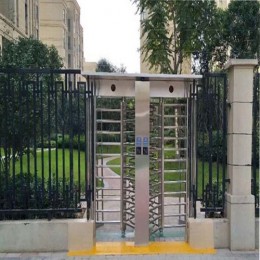

 Double Lane Full Height Turnstile Gate for Residential Area
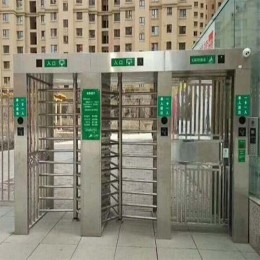
 Dual Lane Tandem Full Height Turnstile Gate for Industry Park
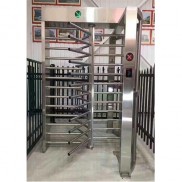 Single Full Height Security Turnstile for Office Buildings
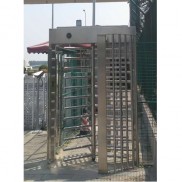 Motorised Double Full-Height Turnstile for Office Buildings
Please leave a message if you are interested in this model